Fat Bass Tone




B-10-S
 BASS PLAYERS: CHOOSE BASS TEN SHORT OR STANDARD TEN LONG
10 POSITIONS FOR FAR MORE TONAL FLEXIBILITY THAN A TRADITIONAL TONE CONTROL
 100% PASSIVE — NO BATTERY OR ACTIVE ELECTRONICS REQUIRED
 PRE-WIRED CONFIGURATIONS AVAILABLE BY REQUEST
 FREE SHIPPING IN THE USA
 EXPERT TECHNICAL SUPPORT
 IN STOCK MEANS IN STOCK
If you like tonal options and you also like your bass to stay passive, then this is likely the best option for you. The Stellartone ToneStyler essentially crams all of the passive EQ control options you can imagine into one incredibly well-built and convenient EQ control. This gives any bass you put it on a lot of different flexibility in ways that you wouldn't even imagine.
It can give you tones that go from deep, thumpy, and dubby to super clear, like almost if you had no tone pot, and virtually every step in between due to all its different capacitor settings. It will make your passive bass sound much more open than it would with a traditional tone pot, and it will also give you different shades of character that simply aren't possible with standard passive controls.
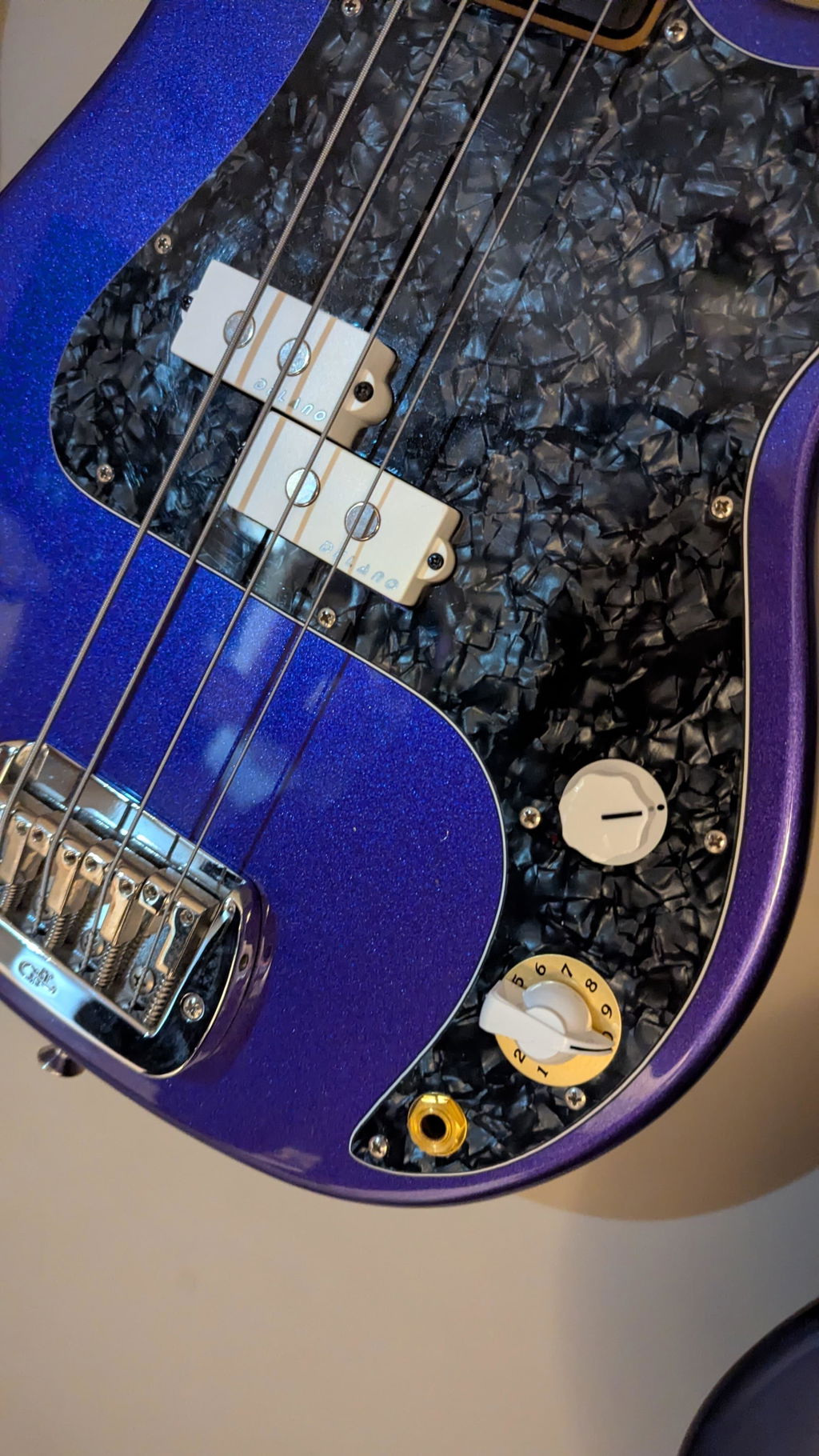
The ToneStyler uses a rotary switch design with multiple capacitor values, allowing you to select from a wide range of tonal options. Each position on the switch provides a distinctly different voice, from vintage warmth to modern clarity. This isn't just a simple tone roll-off. It's a comprehensive tonal palette that transforms what's possible with passive electronics.
The design philosophy behind the ToneStyler focuses on maintaining signal integrity while providing maximum flexibility. Unlike active electronics that can introduce noise or require batteries, the ToneStyler remains completely passive, preserving the natural character of your bass while expanding your tonal options dramatically.
It's a truly unique piece of tone-shaping hardware that you really do have to experience to understand why people who try a ToneStyler just keep using it and love it. The difference is immediately noticeable. Your bass sounds more open, more responsive, and more versatile than you thought possible with passive electronics.
Installation is straightforward, as the ToneStyler is a direct replacement for standard tone pots. The build quality is exceptional, with robust construction that can handle years of professional use.
The ToneStyler works equally well with P-bass and J-bass configurations, as well as other pickup types. It's particularly effective on basses that sound great but could use more tonal flexibility.
Whether you're looking to expand your tonal palette without going active, or you simply want more control over your passive bass's voice, the Stellartone ToneStyler delivers.
The BASS TEN SHORT is a ten-position EQ control designed specifically for bass, featuring a range of hi-cut / mid-cut resonance filters, plus a "virtual tone pot" loading circuit and true bypass.
The B-10-S is designed for passive high-impedance bass pickups and offers the tonal versatility of Stellartone's Bass Ten circuit in the shorter-shaft format. It is an ideal choice for basses with thinner control mounting surfaces where the LONG version is not required.
The S-10-L combines the min-max EQ ranges of Stellartone's GUITAR TEN LONG and BASS TEN LONG. The deepest anti-clockwise circuit #1 selects the traditional #473 bass tone cap, and the adjacent circuit #2 selects the traditional #223 guitar tone cap. The versatile STANDARD TEN LONG is ideal for both guitars and basses, and is compatible with all types of hi-Z passive pickups. Total capacitance range: True Bypass to .047µF.
If you are looking for the DUO SIX or Bass Ten Long, they are currently not available from the manufacturer and will likely not see a return in the near future. Grab a STANDARD TEN LONG OR BASS TEN SHORT instead.
*The Bass Ten Long is NOT FOR "Volume-Volume-Tone", J-Bass, or T-Bird (need to use a Volume-Blend-Tone Configuration instead)*
*Does NOT FIT Epiphone 18-coarse-spline metric push-on knobs.*
100% passive analog circuity - no batteries - zero noise! Made in U.S.A.
24-fine-spline split-shaft tip fits USA push-on knobs, plus 6mm & 1/4” set-screw knobs.
3/8”-32 dia. x 1/2” length USA bushing mounts through all surfaces up to 3/8” thick.
Compact polymer module: 0.875" dia.x 0.8125" behind-panel depth.
Yes, this is position #1
The problem with two volumes is it allows you to do something that makes the operation of the Tonestyler less than ideal. Specifically, attenuating both pickups simultaneously, meaning reducing both volumes. The moment that happens the Tonestyler would lose its connection to the pickups, having been isolated by the volumes, is then more connected to input of amplifier (or whatever first thing bass is plugged into)
No routing needed.

they are absolutely STELLAR nuff said! 😀
Alright, I bought this device last summer, attempted to have it installed via my tech. A few weeks after I handed my bass in, I get a phone call saying the Bass Ten was a dud. I now had some free time to make an effort to fix the bass myself. It turns out my tech wasn't reading the directions correctly and missed a ground. 🤷🤷. Now that I've got the bass working as intended, the results have greatly exceed my expectations!! It may be passive but, the versatility is outstanding! It goes from a light tough of roll off to full on dub.
I would like to thank FBT for being very cool throughout this whole hot mess. I'm a very busy guy even though I'm a bass fanatic. FBT was eager and ready to make things right regardless and you just can't beat that. Buy with confidence.
The Tonesyler is the best sounding passive tone controll/ shaper I've used. Fast and clean would be the response. Pickups finally have equal output when soloed. The myriad of usable tones is easy to work through. Finally I have the potential of my Aero pickups harnessed. Thanks you FBT team!
Many useful tones are available. Nicely wired and easy to install.
I started out looking for a replacement volume pot for my 78 P as the original one was getting a bit crackly when I first saw the Tonestyler, these aren’t easy to source here in the UK which bought me to FBT and their fantastic website. After some deliberation I ordered a pre wired harness from Max and Brian. This was a huge leap of faith for me as apart from a new bridge this had remained pretty well a stock bass for the forty five years that I’ve owned it. The workmanship on the harness is first class with very nice components and it’s a doddle to fit taking me around half an hour.
The difference is night and day, this was already a wicked sounding bass now it’s complete tone monster. This is an absolutely brilliant bit of kit and I couldn’t recommend it highly enough.
Very much looking forward to doing this mod on my JB. Great company and top service.